
Monday morning reaches Tokyo first, then Cairo, Berlin and Mexico City. Almost everyone on Earth lives by the same seven-day week, just as their grandparents did.
That is strange. The day comes from the Earth turning, the month from the Moon, the year from the Sun. But nothing in nature keeps a seven-day beat.1
The short answer: two different sevens, one from a holy day and one from the sky, met in the Roman Empire, and our week came out of that meeting.2 The longer answer starts with what ancient watchers saw at night.
The player loads from YouTube (privacy-enhanced mode) only when you press play. Watch it on YouTube.
Seven lights that wandered
On a clear night a few thousand years ago, most stars kept their places, turning together like a painted dome. But a few lights moved.
Ancient watchers counted seven: the Sun, the Moon, and five bright points we now call Mercury, Venus, Mars, Jupiter and Saturn. The Greeks called them planētai, "wanderers", which gave us the word "planet".3
The Moon comes closest to a week. From new moon to half moon, to full, and to half again, each step takes about seven and a half days.1 So one popular theory says the week began with the Moon. But four weeks make twenty-eight days, and the Moon takes about twenty-nine and a half. Our week drifts away from it, and no ancient text that we know of says the week was made from the Moon.14
The sky would give our days their names. But the oldest seven-day week we can trace rests on a different account.
Shabbat
As always on Borrowed Numbers, we look at religious customs through history and culture: we describe what each tradition teaches, with respect, and judge no belief.
In the Book of Genesis, God makes the world in six days. On the seventh day He rests, and He blesses that day and makes it holy.5 The Ten Commandments tie Shabbat, the Sabbath, to that week: six days of work, and the seventh a day of rest. In Deuteronomy the commandment adds a second reason: remember that you were slaves in Egypt. The rest is for servants too, and even the ox and the donkey.5
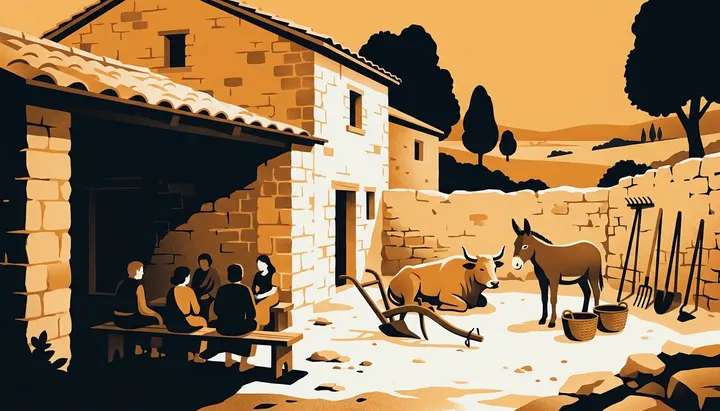
In the Jewish week, only one day has a name: Shabbat. The others are counted, so Sunday is Yom Rishon, "the first day".5
Most historians see this as the oldest seven-day week still kept today. It was known by the sixth century BC at the latest, and many scholars say earlier. It has never been tied to the Moon.31
Jewish tradition teaches that Shabbat was given by God, in memory of creation and of freedom from Egypt.5 Historians ask a different question: does a seven-day cycle appear anywhere earlier? They have looked hard, especially in Babylon, which had unlucky days on dates like the seventh, fourteenth and twenty-first of some months, and a full-moon day called šapattu, a word that sounds like Shabbat. But Babylon had no week, and no earlier seven-day week has been found.64
In the chapter of Genesis where Jacob's embalming takes forty days, his son Joseph mourns him for seven.5 Jewish mourners still sit shiva, Hebrew for "seven": seven days of mourning at home for a close relative.7
How the planets named the days
In 63 BC the Roman general Pompey besieged the Temple in Jerusalem. On the Sabbath the defenders only defended themselves, and the Romans used those days to build up their siege works.8
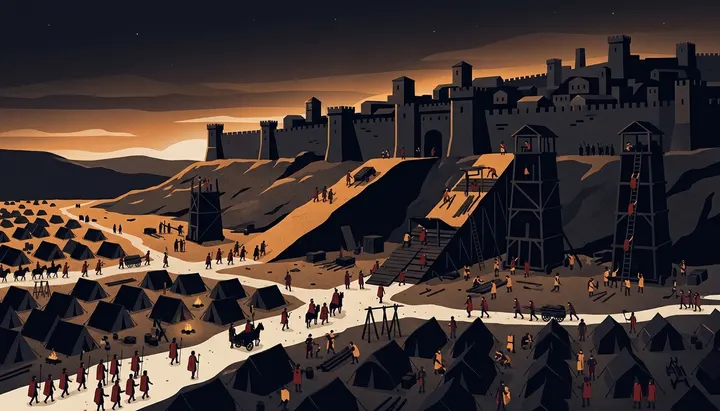
Over 250 years later, the Roman historian Cassius Dio told that story. To the Romans, the Sabbath was "the day of Saturn", and Dio stopped to explain why the days had planets' names at all.8
One of his two answers comes from astrology, and it needs twenty-four hours. Those go back to Egypt, which gave us twelve hours of night, timed by the stars, and twelve of day.9
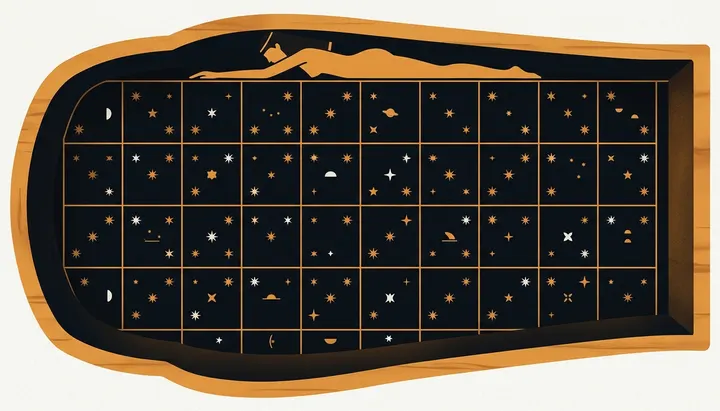
The rule: every planet gets an hour in turn, and the planet of the first hour names the day. Put the seven wanderers in the old order, slowest first: Saturn, Jupiter, Mars, the Sun, Venus, Mercury, the Moon. Saturn gets the first hour of the first day. After twenty-four hours the count has gone round three times, with three to spare, so the next day's first hour falls to the Sun.8
Keep going, and the days fall into line: Saturn, Sun, Moon, Mars, Mercury, Jupiter, Venus.8 That's why the order of our days jumps about the sky. Saturday, Sunday, Monday.
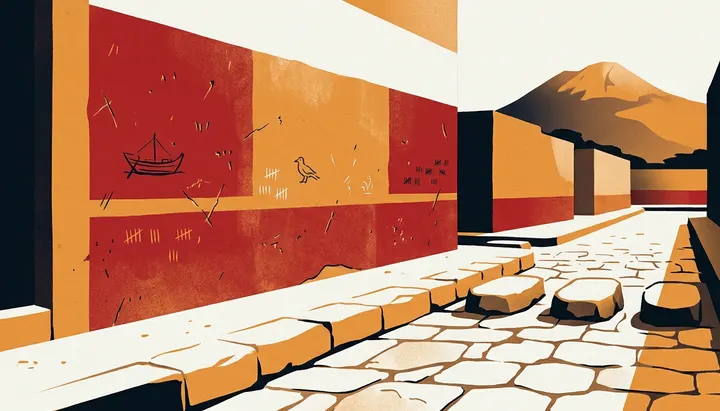
The Romans scratched it on their walls. At Pompeii and Herculaneum, buried by Vesuvius in AD 79, graffiti list the days of the planetary gods, starting with Saturn. One note at Pompeii, from AD 60, gives "the day of the Sun" next to the local market days.103
Two sevens meet
Where the planetary week was invented, historians aren't sure. Dio said Egypt, and many historians have thought Greek astrologers there, perhaps in Alexandria, worked it out. But the oldest evidence comes from Italy.21 What is clear is that in the Roman Empire two sevens met: the Jewish week with its Sabbath, and the astrologers' week of seven planets.2
Christians gathered on the first day of the week, the day they remember Jesus rising from the dead.5 Around AD 150 the writer Justin Martyr already calls it "the day called Sunday".11 In 321 the emperor Constantine ordered judges, city people and workshops to rest on "the venerable day of the Sun". Farmers could keep working.12
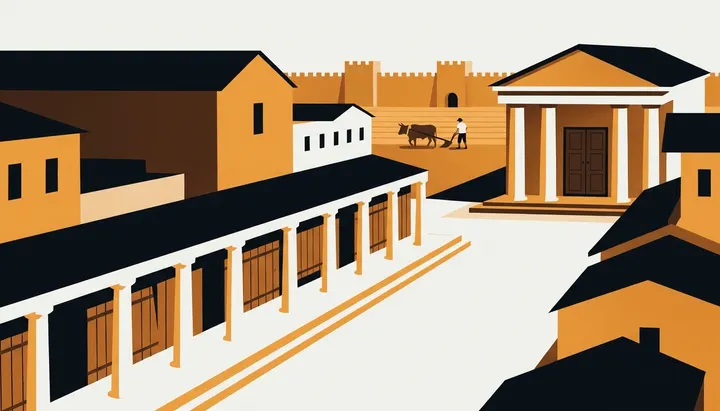
Listen to your own week, and you can still hear the wanderers. English kept three: Saturday, Sunday and Monday. For the other four it swapped in Germanic gods, so Thursday is Thor's day, standing in for Jupiter.13 Spanish kept five, from lunes, the Moon's day, to viernes, the day of Venus, but sábado is the Sabbath and domingo "the Lord's day".14 German has Sonntag and Montag, for the Sun and the Moon, but Wednesday is Mittwoch: simply "mid-week".15
The same seven travelled east with astrology. In Hindi, Sunday is ravivār, the day of Ravi, the Sun, and the days run in the same order.16 In Japanese, Tuesday is the day of fire, for Mars.17
Some languages turned the planets down. Portuguese numbers its weekdays: segunda-feira, "second day".18 Arabic numbers most days too. Friday is al-Jumʿa, the day of gathering for the weekly congregational prayer, and Saturday is al-Sabt, the Sabbath.
The weeks that didn't take over
Seven wasn't the only choice. Ancient Rome first had an eight-day market cycle, and for a while the two ran side by side.3
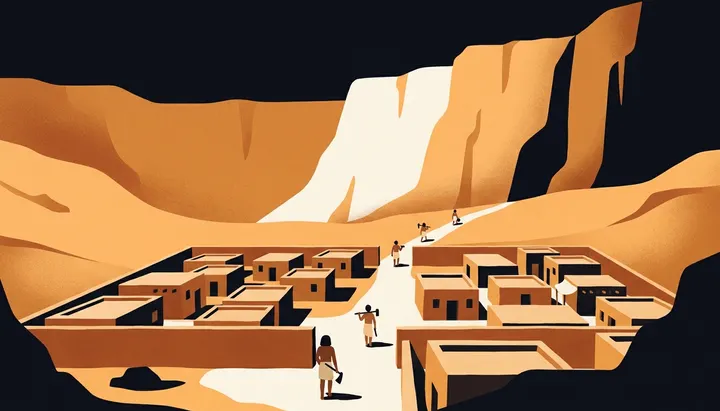
Egypt split each thirty-day month into three ten-day weeks. The royal tomb-builders worked to that rhythm, with a couple of days off at the end of each ten.919
As far as historians know, no one in the Americas counted seven-day weeks before the Spanish arrived.13 The Aztecs held their big markets every five days,20 and chroniclers of the Spanish era describe Inca fairs about three times a month, though their accounts disagree.21
In 1793, revolutionary France brought in a ten-day week. Sunday returned as the official day of rest in 1802, and the whole calendar was scrapped a few years later.22 In 1929 the Soviet Union moved its workers to a five-day schedule, then a six-day one. These were work schedules: the calendar kept its seven-day week, and in 1940 the seven-day working week came back.23
Other weeks still run today, like the five-day market weeks of Java.24 But none replaced the seven. Seven was never a law of nature. It was a choice that stuck, and became the world's standard.
Other sevens
Seven matters in many traditions, each with its own reasons.
In the Bible, Pharaoh dreams of seven fat cows and seven thin ones, and Joseph reads them as seven years of plenty, then seven of famine.5 An Egyptian inscription carved much later on an island near Aswan, the Famine Stela, also tells of seven years when the Nile flood failed.25 Across the ocean, the Aztecs said their ancestors came out of Chicomoztoc, the Place of Seven Caves.26
In Mecca, pilgrims walk around the Kaaba seven times, following the example of the Prophet Muhammad, and seven times between the hills of Safa and Marwa. Tradition tells that Hajar, or Hagar, the mother of Ishmael, ran between them seven times, searching for water for her son, until the spring of Zamzam appeared.27
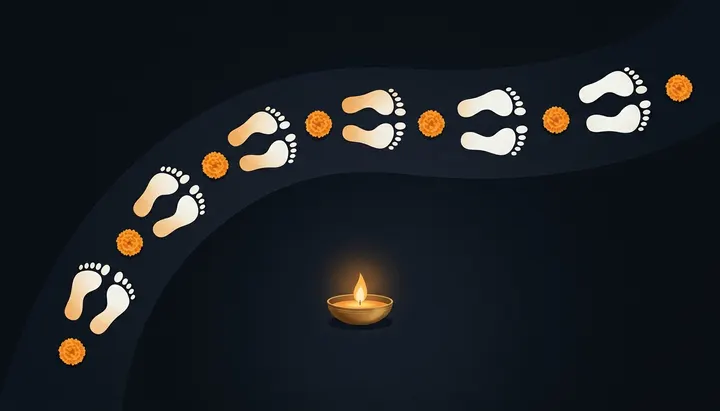
In many Hindu weddings, the couple take seven steps together, the saptapadi, with a promise at each step. Under India's Hindu Marriage Act, where this rite is used, the marriage is complete at the seventh step.28
The rainbow's seven colours come from Isaac Newton. He saw five main colours and added orange and indigo. In his Opticks he divides the colours "after the manner of a musical chord", into seven, like the notes of a scale.29
In 1956 the psychologist George Miller wrote a famous paper, "The magical number seven, plus or minus two". He opens by joking that he has been "persecuted by an integer".30 Later research, notably by Nelson Cowan, argues that the real limit of short-term memory is nearer four.31 Miller himself suspected the world's many sevens were mostly coincidence.30
The week we keep
So why seven? The oldest week we can trace, Shabbat's week, rests on the creation account. The sky's seven wanderers gave the days their names and order. The Moon's quarters may have made seven feel natural, but that is a theory. In the Roman world these sevens met, and that is the week we still keep.
The day, the month and the year are set by the sky. The week is set by us: by billions of people who all start again on the same day.
Where you live, does the week start on Sunday, on Monday, or on Saturday? Tell us in the comments under the video on YouTube.